
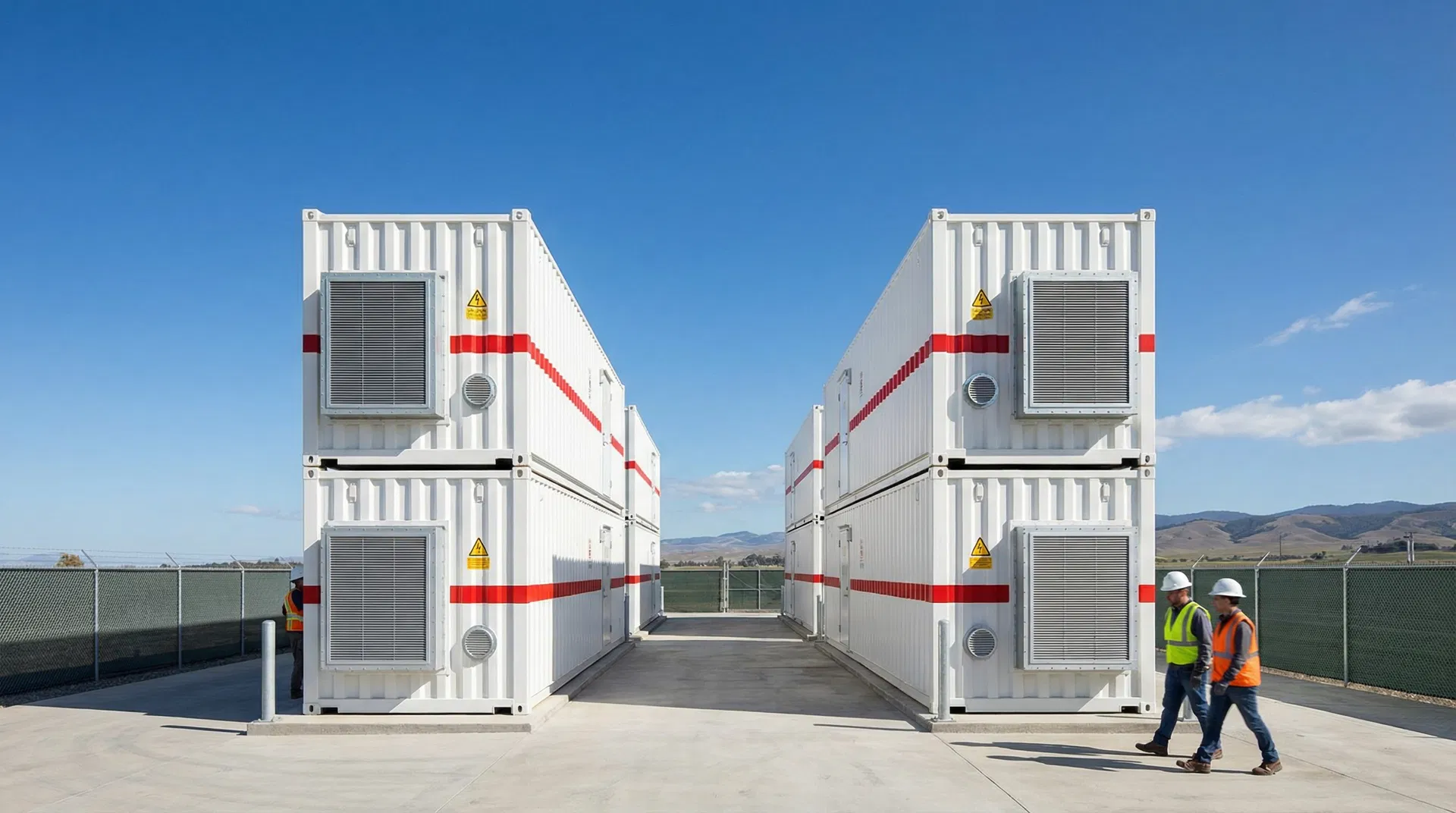
TKC-BESS-DLC Energy Storage Enclosure System
BESS-DLC: An Enclosure System Born for Energy Storage
In today's rapidly developing energy storage industry, BESS (Battery Energy Storage System) safety enclosure has evolved from an "optional configuration" to an "engineering necessity."
The TKC-BESS-DLC Energy Storage Enclosure System is a systematic enclosure solution specifically developed for BESS application scenarios. It combines the modular advantages of ISO container structures with FM-certified DLC explosion venting technology, providing energy storage projects with an enclosure path that balances safety and engineering feasibility.
System Architecture
Core Components
1. ISO Container Main Structure
- Standard 20-foot or 40-foot ISO container conversion
- Structural strength compliant with ISO 1496 standard
- Modular design supporting single-unit independent or multi-unit combination
2. DLC Explosion Venting Panels
- Compliant with FM 4440 certification standard
- Explosion vent area configured according to NFPA 68 calculations
- Venting direction customizable based on site conditions
3. Enclosure Sealing System
- Specialized sealing design for door frames, corner fittings, and other connection points
- Waterproof rating IP54 or above
- Supports subsequent maintenance and replacement
4. Monitoring Interface
- Reserved BMS (Battery Management System) interface
- Supports integration of temperature, gas concentration, and other sensors
- Works in coordination with active protection systems (BESS Vent, Vent PRO)
System Operating Logic
Normal operating state
    ↓
Thermal runaway triggered (temperature/gas concentration anomaly)
    ↓
BMS alarm → Active protection system response
    ↓
BESS Vent controlled venting (first layer)
    ↓
Vent PRO active pressure relief (second layer)
    ↓
DLC explosion vent panel passive response (third layer)
    ↓
DivEx directional guidance (energy directed to safe direction)
Normal operating state
    ↓
Thermal runaway triggered (temperature/gas concentration anomaly)
    ↓
BMS alarm → Active protection system response
    ↓
BESS Vent controlled venting (first layer)
    ↓
Vent PRO active pressure relief (second layer)
    ↓
DLC explosion vent panel passive response (third layer)
    ↓
DivEx directional guidance (energy directed to safe direction)
Technical Parameters
| Parameter | Specification |
|---|---|
| Base Structure | ISO 20ft / 40ft container |
| Structural Standard | ISO 1496 |
| Explosion Venting Standard | FM 4440 / NFPA 68 |
| Protection Rating | IP54 |
| Explosion Vent Area | Configured per project calculation |
| Operating Temperature | -40°C ~ +60°C |
| Design Life | ≥20 years |
Application Scenarios
Scenario 1: Single-Unit Independent Energy Storage
Suitable for small to medium energy storage configurations or independently arranged areas.
Characteristics:
- Clear single-unit enclosure with defined safety boundaries
- Easy installation, short construction period
- Relatively simple subsequent maintenance
Typical Applications: Industrial park backup power, commercial building peak-valley adjustment
Scenario 2: Multi-Unit Side-by-Side Energy Storage System
Suitable for energy storage projects with larger capacity and concentrated equipment layout.
Characteristics:
- Standardized combination, unified enclosure design
- Unified release direction planning, preventing chain reactions
- Supports phased capacity expansion
Typical Applications: Large commercial and industrial energy storage, grid-side energy storage stations
Scenario 3: Existing Site Renovation Projects
Suitable for energy storage projects in existing factory areas, equipment areas, or sites with limited conditions.
Characteristics:
- Modular design adapts to various site conditions
- Can be integrated with existing building structures
- Helps shorten construction period
Typical Applications: Old factory renovation, limited space energy storage deployment
Comparison with Conventional Enclosure Solutions
| Comparison Dimension | Conventional Enclosure | TKC-BESS-DLC |
|---|---|---|
| Explosion Venting Design | Usually none or passive | FM certified active + passive |
| Modularization Level | Low | High (standardized combination) |
| Certification System | Usually none | FM 4440 / NFPA 68 |
| Engineering Feasibility | Depends on site conditions | Factory prefabricated, on-site installation |
| Full Lifecycle Cost | Low initial, high maintenance | Moderate initial, low maintenance |
Core Value Summary
For Owners: Reduce BESS project safety risks, meet insurance and regulatory requirements, improve project financiability.
For Design Units: Provide certified standardized solutions, simplify design work, reduce design risks.
For EPC General Contractors: Factory prefabrication reduces on-site construction, standardized design facilitates project replication, reduces implementation risks.
Conclusion
The TKC-BESS-DLC Energy Storage Enclosure System is not just a product, but a systematized solution verified through engineering.
As energy storage projects continue to expand, the value of enclosure systems has evolved from a simple equipment shell to an important component of safety control, engineering delivery, and system reliability.
TKC — Science-based Industrial Safety & Protection
For more technical details or professional assessment, please contact the TKC expert team.
![[Energy Storage Safety] Is Your BESS Container Really Safe?](https://d2xsxph8kpxj0f.cloudfront.net/310519663511498247/RqLNfBguUBFePjq4zjGPbw/article-6-bess-safety-Kg5GzqDDXtbdSfmp5swJg9.webp)