Gas Suppression "Leaking"? The Fatal Blind Spot in Data Center Fire Protection — FM Certified Firestop + Airtightness Testing One-Stop Solution!
Is Your Server Room Really "Sealed"?
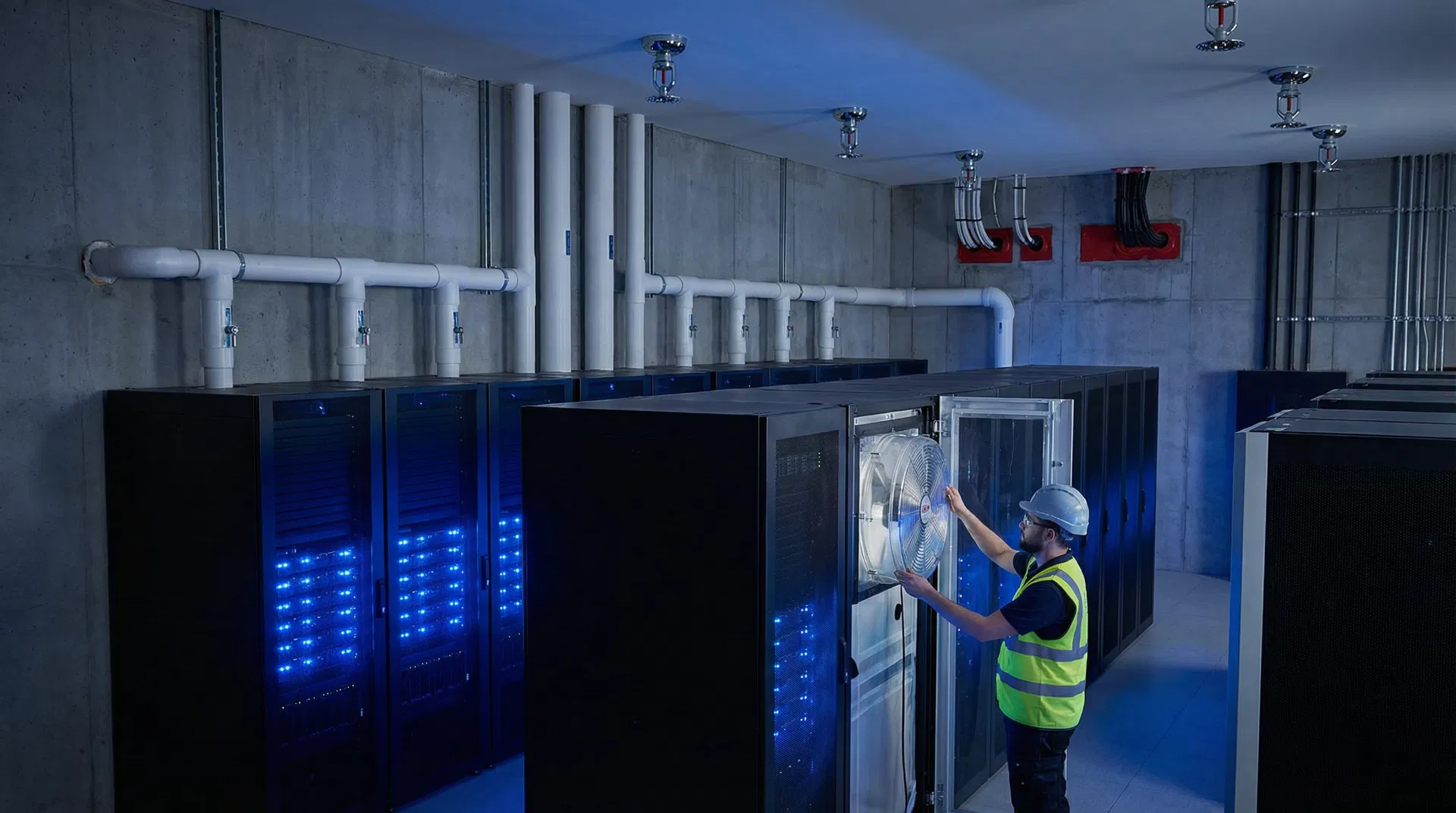
Data centers are the digital hearts of enterprises. To protect expensive IT equipment, clean agent fire suppression systems such as heptafluoropropane and IG541 have become standard configurations.
However, a fatal problem ignored by most owners is: after fire suppression gas is released, if the enclosure structure cannot maintain sufficient airtightness, the suppressant will dissipate within minutes — and the fire will immediately reignite.
In server room environments densely packed with cable trays and wall penetrations, "gas leakage" and "fire compartment failure" are the most hidden and most dangerous safety blind spots in data centers.
Hitting the Pain Point: Qualified Materials ≠ Qualified System
Many owners purchase FM/UL certified firestop mortar and boards and think "everything is fine." This is not the case.
The effectiveness of firestop depends on the complete closed loop of "Design → Installation → Inspection → Maintenance" (DIIM). Any minor human deviation in the installation phase — non-conforming annular space, insufficient fill depth — can make an entire fire wall useless in a fire.
Buying qualified materials doesn't buy a qualified system.
Special Challenges for Data Centers
Firestop in data centers faces more complex challenges than ordinary buildings:
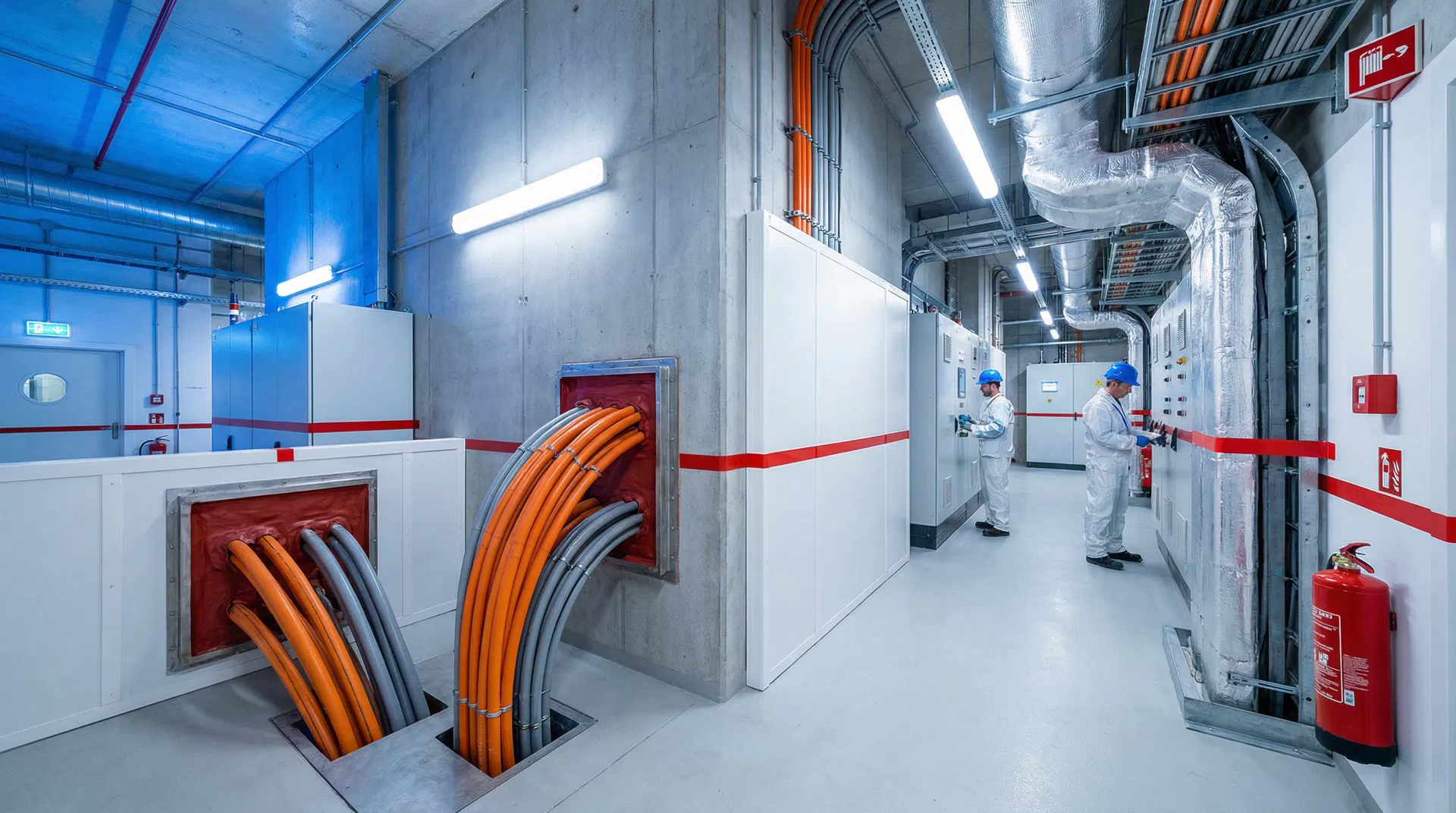
1. Extremely High Penetration Density Cable trays, pipes, and cooling lines in data centers densely penetrate fire walls, with each penetration point being a potential leakage point.
2. Frequent Subsequent Construction The iteration of IT equipment leads to frequent cable additions and removals, with each construction potentially damaging existing seals.
3. Strict Airtightness Requirements NFPA 2001 requires that the Retention Time of gas suppression systems be no less than 10 minutes, placing quantitative requirements on the airtightness of enclosure structures.
4. Verification Difficulties Traditional visual inspection cannot detect subtle leakage points; specialized airtightness testing equipment is required.
TKC's Four-Step One-Stop Closed-Loop Delivery
To thoroughly resolve the industry's persistent problem of "someone does the construction, no one takes responsibility," TKC has launched a four-step closed-loop delivery solution: "Detection → Diagnosis → Repair → Verification":
Step 1: Airtightness Testing
Based on Standards: NFPA 2001 / FM 5-32
- Enclosure structure airtightness testing (Door Fan Test)
- Bidirectional positive and negative pressure, combined with smoke generators to precisely locate leakage points
- Infrared thermal imaging assistance to discover hidden leakage points
- Retention time calculation: precisely calculate the effective Retention Time of suppressant
Step 2: Problem Diagnosis
- Professional diagnostic report: clearly presenting leakage point distribution and firestop deficiency list
- Risk level assessment: prioritization based on leakage volume and location
- Repair solution recommendations: specific repair solutions for each problem point
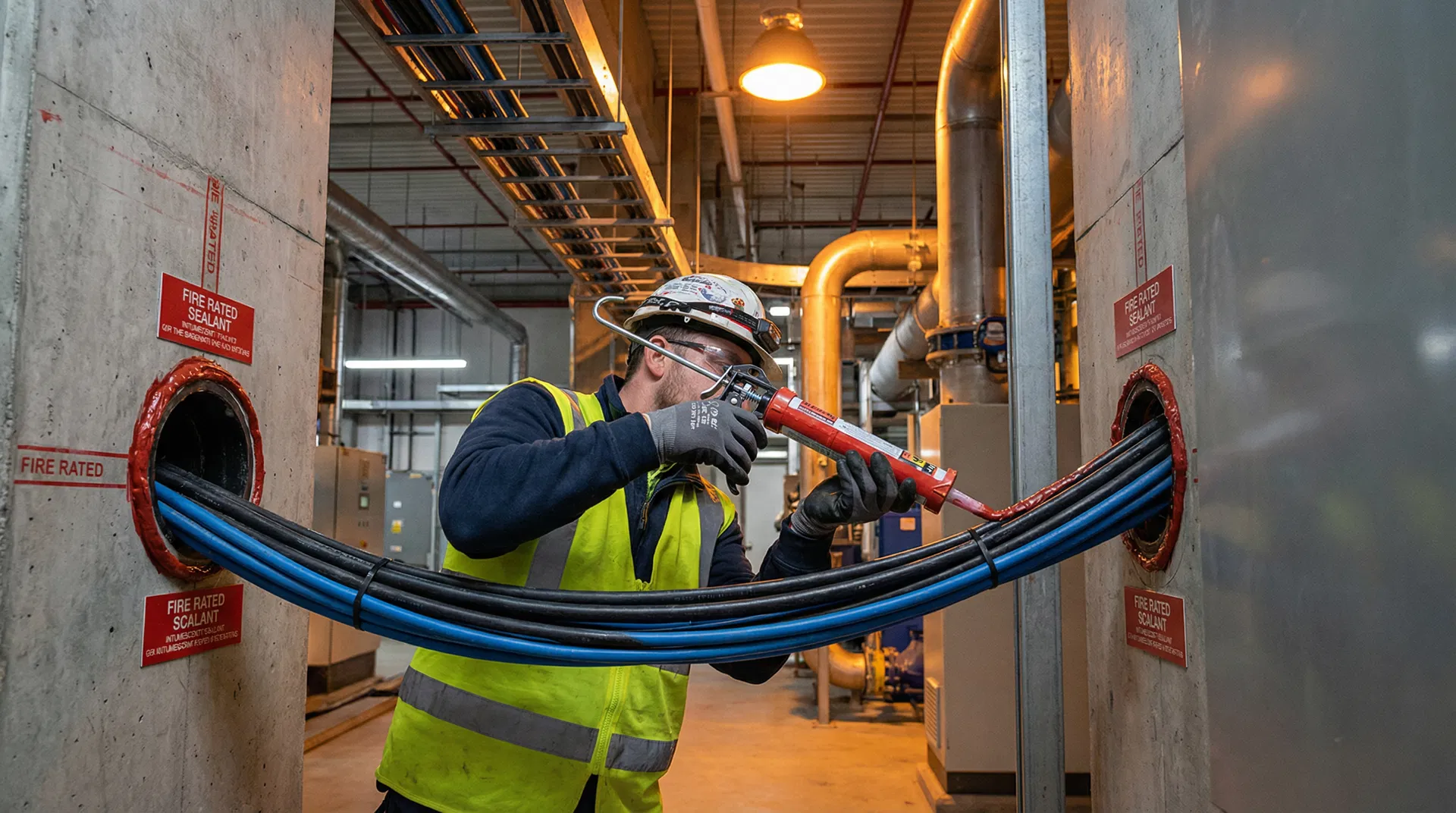
Step 3: FM Certified Repair Construction
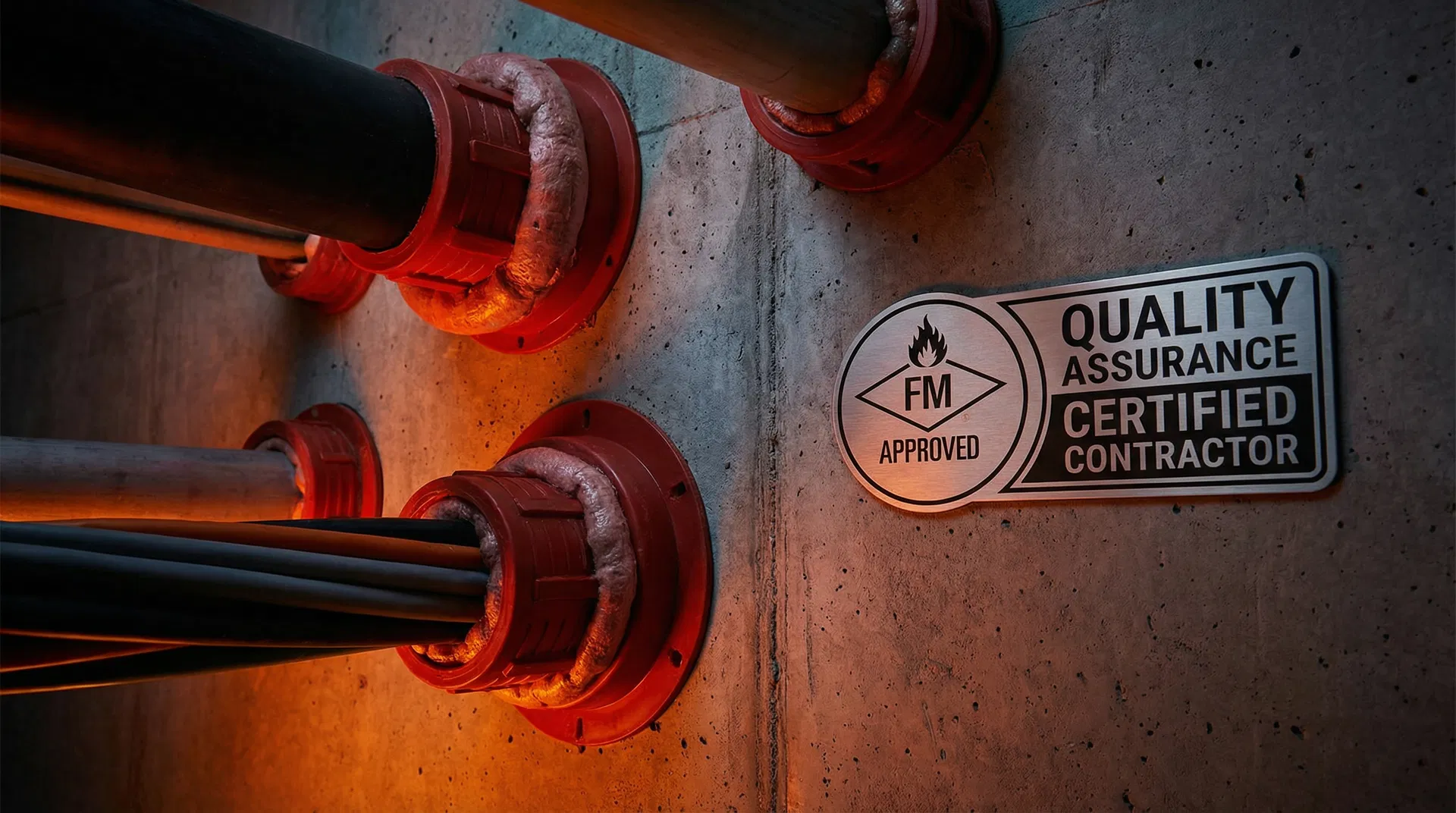
Qualification Guarantee: FM 4991 Certified Contractor, One of Very Few in Asia
- DRI expert leadership: every seal personally supervised by DRI who has passed FM's rigorous assessment
- Certified material system: all repair materials are FM-listed systems
- Full traceability documentation: each point generates an independent "identity file" — site photos, GPS coordinates, material batch numbers all included
Step 4: Result Verification
- Airtightness testing performed again after construction completion
- Data closed loop proves repair effectiveness
- Acceptance report issued meeting NFPA 2001 requirements
Typical Case
A Financial Institution Data Center (Shanghai)
Project Background: This data center was built 5 years ago, IT equipment has been updated multiple times, and the status of firestop is unknown.
Inspection Findings:
- 73 firestop missing or failed points discovered in total
- 12 of which are high-risk points (located at main cable tray penetrations)
- Airtightness testing showed: actual Retention Time was only 4.2 minutes, far below the 10-minute requirement of NFPA 2001
Repair Results:
- All 73 points completed FM certified repair
- Re-tested Retention Time reached 14.8 minutes, meeting requirements
- Complete construction documentation delivered, meeting insurance audit requirements
One-Line Summary
Choosing an FM certified contractor essentially means purchasing a quality assurance system backed by international third-party endorsement.
Don't let data center safety be destroyed by an inconspicuous gap.
TKC — Science-based Industrial Safety & Protection
For more technical details or professional assessment, please contact the TKC expert team.