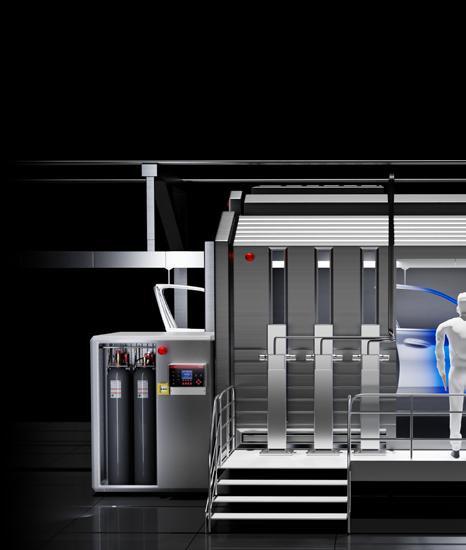
Equipment Protection / FIREPRO

FIREPRO Industrial Fire Protection Systems

Detect the ignition source. Configure the right response.

Equipment fire detection and automatic extinguishing, plus spark detection and downstream water extinguishing for pneumatic conveying. Configure each protection method for its specific hazard.

Source: TKC FIREPRO Industrial Fire Protection Product Catalogue · October 2026

FIREPRO Industrial Fire Protection Systems

Equipment fire protection · Spark detection and water extinguishing

Fire protection and explosion protection have different roles

Duct spark extinguishing intercepts sparks and glowing particles before downstream hazards. It does not replace internal dust-collector fire protection or explosion venting, suppression and isolation required by the risk assessment. Equipment protection and duct spark extinguishing must be designed separately.

Modular detection, control and extinguishing

Combine detection, control, extinguishing and process interlocks for each protected hazard. Functions depend on the selected detector model and system configuration.

Modular detection, control and extinguishing
01

LumEx and temperature detection

Detect sparks, flame radiation or relevant temperature rise. Options include infrared, combined infrared/ultraviolet and temperature detection. Model-dependent self-test and optical-window monitoring support contamination checks and cleaning.

02

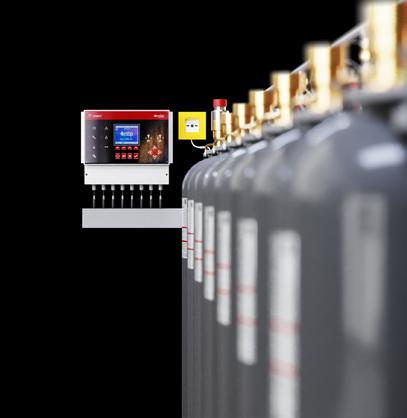
CONEX control unit

Process detection signals and activate alarms, extinguishing and process interlocks. Confirm available interfaces, operating-status indication and the complete cause-and-effect logic.

03

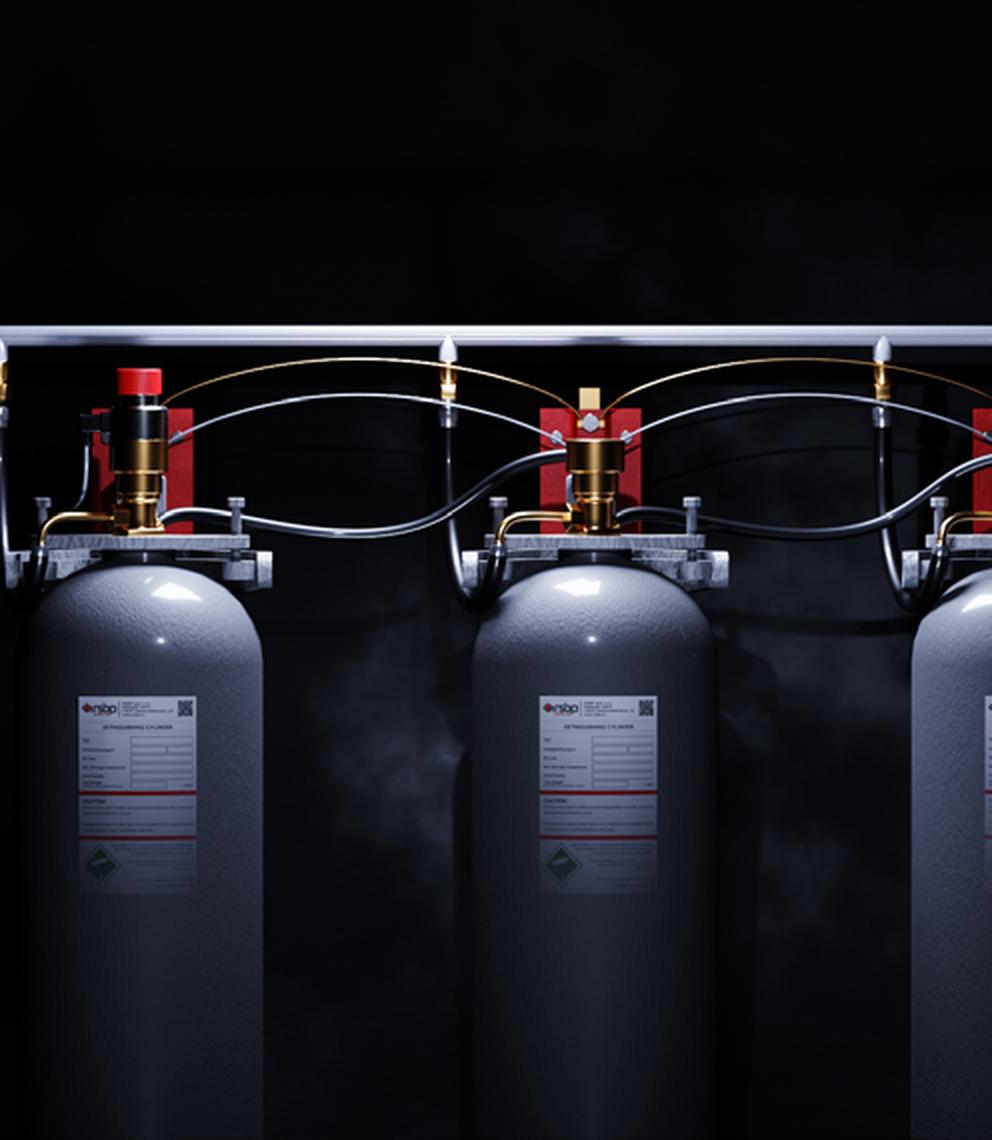
Extinguishing devices

Select compatible agents, valves and nozzles for the material, equipment and protection objective. Verify total response time across detection, control and valve actuation.

04

Auxiliary and monitoring devices

Provide manual release, audible/visual alarms and operating-status monitoring as configured. Cylinder-based systems can use weighing devices to monitor extinguishing-agent quantity.

Select the protection method, not only a component

Protection methodApplicationDesign focus
Local applicationCoating equipment and machine-tool working areasDirect nozzle coverage at the hazard; compatible agent selection.
Total floodingSuitable enclosed spacesAgent, enclosure and retention conditions must be designed together.
Extinguishing barrierConnections between spray booths and filtration equipmentControl flame spread and verify the applicable design basis.
Spark detection and water extinguishingPneumatic materials-handling ductsDetect sparks/glowing particles, then extinguish them in the downstream water-spray zone; verify spacing, pressure/flow and response time.

Spark detection for pneumatic conveying

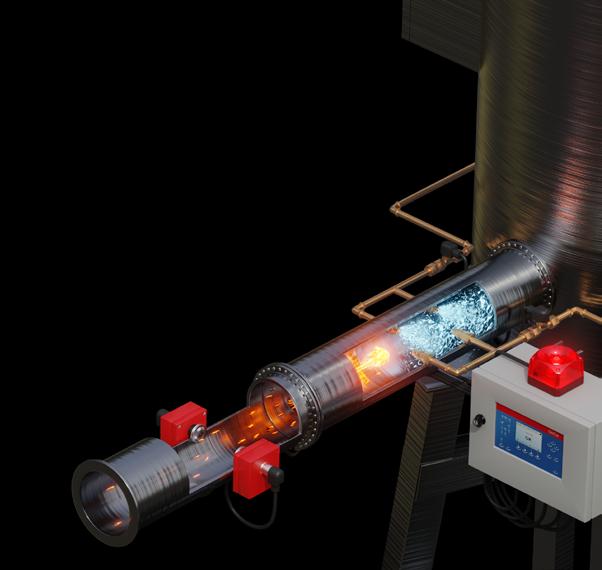
Detectors identify sparks and glowing particles inside the duct. The control unit activates downstream water spray. Fast valves and anti-clog nozzles form part of the configuration; short ducts and outdoor installations require spacing, temperature and exposure checks.

Spark detection for pneumatic conveying

FM configuration listed in the October 2026 catalogue

Catalogue itemListed configuration
FM certificateFM26US0079
Class of Work3265 – Spark Detection and Extinguishing Systems
Control unitsCONEX 2 ZONE / 8 ZONE
Detectors / nozzlesLumEx 1, 2, 4 / TVM-K34
Specified manualIMM-223 (06-2026) Rev 0

These identifiers reproduce the supplied catalogue, not a live approval-status verification. FM applicability is limited to the current listing and specified manual for pneumatic materials handling. Do not extend this scope to every FIREPRO equipment-protection or extinguishing application.

Check the FM Approval Guide

Engineering configuration by process

The catalogue distinguishes each process and its safety actions. The cited FM Data Sheet editions are catalogue references; confirm the applicable edition and project requirements during design.

Dust collectors and collection systems

01

Dust collectors and collection systems

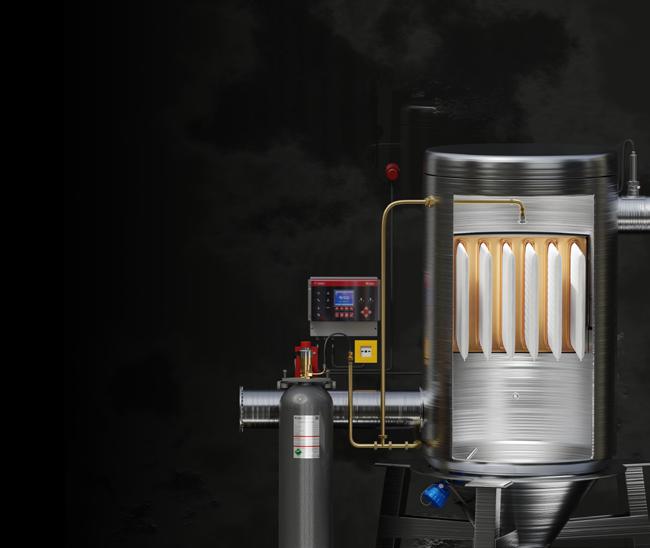
Intercept upstream ignition sources with spark detection and water extinguishing. Provide separate internal water protection for bag/cartridge sections, clean-air plenums and obstructed hoppers. Interlock diversion/outfeed where required and retain assessed explosion protection.

FM DS 7-76 (October 2024), §§2.4.2.1.1, 2.10.4.2, 3.3.1, 3.5.2

02

Wood rotary drying

A single spark initiates water spray. Provide secondary detection after the spray and before the cyclone. Safety actions include stopping feed, shutting off heat and activating cyclone deluge; isolate or divert downstream discharge. Keep the fan and drum running in this process to clear material and prevent drum distortion. Do not apply a blanket all-stop sequence.

FM DS 7-10 (May 2010), §2.3.7.2, pp. 16–17

03

Wood flash drying and size reduction

Provide spark detection, extinguishing and isolation; secondary detection triggers deluge. Add high-temperature limit detection at material/cyclone inlets and required explosion venting or suppression/isolation. Inspect fiber/resin deposits and keep detector optics and nozzles effective.

FM DS 7-10 (May 2010), §§2.3.7.2(d), 2.3.8, 2.3.9; FM DS 7-76 (October 2024)

04

Pulp flash drying

Detect downstream of the drying tower and spray upstream of the cyclone inlet. Place secondary detection between the spray zone and cyclone. Coordinate downstream isolation, feed/heat shutdown, tower/cyclone deluge and drainage. Keep conveying fans running to clear pulp in this process; retain required explosion venting and high-temperature backup actions.

FM DS 7-4 (April 2026 interim revision), §§2.4.2, 2.4.3.2, p. 28

05

Industrial exhaust ducts

Check duct/lining combustibility and deposits against the applicable criteria. Design internal duct fire protection separately from spark extinguishing. Provide low-point drainage and check water loads, contaminated discharge, airflow and interlocks. Reassess after branch or fan changes. This catalogue reference excludes process piping.

FM DS 7-78 (October 2024 interim revision), §§1.0, 2.2, 2.3, 2.4

Spray booths and coating equipment

06

Spray booths and coating equipment

Assess spray areas, electrostatic grounding, coating deposits and filtration equipment. Provide detection/extinguishing at the hazard and interlock spraying and material supply. Confirm the extinguishing agent and certification applicability for the specific design.

Catalogue, p. 11

07

Machine tools and production machinery

Assess machine-tool working areas for machining heat, oil mist and electrical faults. For mixing, drying, milling and crushing equipment, select agents for the material, temperature and equipment design, and coordinate shutdown/hazardous-material isolation. Where combustible dust is present, verify both fire and explosion protection.

Catalogue, p. 12

Information required for system selection

Input to confirmEngineering checks
Materials and hazardsMaterial properties, particle size, moisture and required dust-test data; agent compatibility and required explosion protection.
Conveying and installationDuct diameter, normal/maximum velocity, temperature, pressure, fans, branches, straight runs and service access.
Detection and water sprayManual-specified minimum spacing, nozzle coverage and response time; water pressure/flow and environmental conditions.
Power and interlocksPower supply, hazardous-area certification and control interfaces; secondary detection actions and connected-equipment safety responses.

Configure to the current FM listing and IMM-223 manual where applicable. Apply DS 7-76 to the relevant combustible-dust hazards. No universal spacing, water-demand or response-time value is specified on this page.

Functional verification and maintenance

01

Monthly inspection

The catalogue cites DS 7-76 as specifying at least monthly inspection for spark detection and extinguishing systems. Severe service may require more frequent checks.

02

Complete functional testing

Follow manufacturer guidance and retain records. Verify detection, valve water discharge, alarms and interlocks against the design.

03

Cleaning and servicing

Maintain optical windows, nozzles and service access. Check contamination, blockage, water supply and fault indications.

04

Process changes

Reassess protection and interlocks after changes to materials, branches, fans, capacity or control programs. Spark-system return to standby does not independently reset shutdown or isolation.

Catalogue references: FM DS 7-76 (October 2024), §2.6.2, Table 2.6.2.1-1 and §2.6.6; DS 7-78, §2.4.

FIREPRO selection questions

Does spark extinguishing replace a dust collector's explosion protection?

No. Duct spark extinguishing intercepts upstream ignition sources. Internal collector fire protection and required explosion venting, suppression or isolation must be assessed separately.

Is every FIREPRO application covered by the catalogue's FM Class 3265 configuration?

No. The catalogue identifies FM26US0079 for the specified pneumatic materials-handling configuration: CONEX 2 ZONE / 8 ZONE, LumEx 1, 2, 4 / TVM-K34 and IMM-223 (06-2026) Rev 0. Other protection methods need their own certification-applicability checks; current status must be verified in the official listing.

Should every fan and machine stop after detection?

Not as a universal rule. The catalogue's wood rotary drying and pulp flash drying sequences keep the specified fan/drum or conveying fans running to clear material. Feed, heat, downstream isolation and deluge have process-specific actions; define the full cause-and-effect matrix.

Original product documentation

Download the owner-supplied 15-page English catalogue for the product configuration, process examples and cited design references. Project selection must be checked against current technical documents and the actual installation conditions.

Download product catalogue (English PDF)

Discuss system selection

Configure to the current FM listing and IMM-223 manual where applicable. Apply DS 7-76 to the relevant combustible-dust hazards. No universal spacing, water-demand or response-time value is specified on this page.